
Minimal Jewelry for Men vs Women: Key Differences
Monday, December 22, 2025
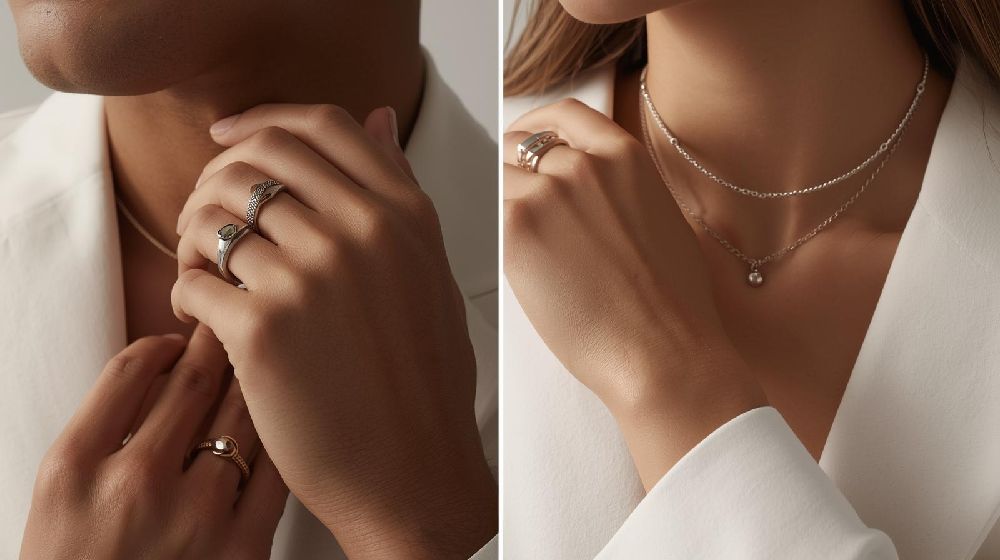
Minimal jewelry has become a defining element of modern style for both men and women. Clean designs, subtle detailing, and everyday comfort have replaced heavy ornamentation, making minimal jewelry a universal fashion statement. However, while the philosophy of minimalism remains the same, the approach to design, styling, and functionality differs noticeably between men’s and women’s jewelry.
Understanding these differences helps consumers choose pieces that align with their personal style and lifestyle.
Design Language: Bold Simplicity vs Delicate Precision
Minimal jewelry for men typically leans toward bold simplicity. Designs often feature strong lines, solid forms, and structured shapes that convey strength and confidence. Flat bands, clean-edged bracelets, and geometric pendants dominate men’s minimal collections.
Women’s minimal jewelry, on the other hand, emphasizes delicate precision. Slim profiles, refined curves, and softer silhouettes define the aesthetic. Thin chains, petite studs, and lightweight bangles create an elegant look that feels graceful yet powerful.
Metal Choice and Finish
Men’s minimal jewelry often favors muted or matte finishes. Brushed gold, satin textures, or understated polish give a rugged yet refined appearance. Yellow gold and two-tone gold combinations are popular, offering a classic masculine appeal without being flashy.
Women’s minimal jewelry usually highlights high-polish finishes. Glossy yellow gold, rose gold, and white gold enhance the jewelry’s elegance and light-reflecting quality, complementing a wide range of outfits from casual to formal.
Weight and Comfort
Comfort is a key factor in minimal jewelry for both genders, but preferences differ. Men generally prefer slightly heavier pieces that feel substantial and durable. Even minimal designs are expected to have a certain weight that conveys strength and longevity.
Women’s minimal jewelry prioritizes lightweight comfort. Pieces are designed for long hours of wear, ensuring they feel almost invisible while still adding style and sophistication.
Styling Purpose and Usage
Men often use minimal jewelry as a style accent rather than a focal point. A single ring, chain, or bracelet is usually enough to complete the look. The goal is subtle enhancement rather than visual impact.
Women, however, often use minimal jewelry to build a layered look. Stacking rings, layering chains, or wearing coordinated sets allows for personal expression while maintaining a clean, minimal aesthetic.
Symbolism and Emotional Connection
For men, minimal jewelry frequently carries symbolic meaning—commitment rings, spiritual pendants, or signet-inspired pieces. The emotional value is often tied to purpose and identity.
For women, minimal jewelry often holds deeper emotional and aesthetic significance. It can represent milestones, self-expression, independence, or everyday elegance. These emotional layers influence design choices and styling preferences.
Fashion Compatibility
Men’s minimal jewelry is designed to integrate seamlessly with structured fashion such as formal shirts, tailored suits, and smart-casual outfits. The jewelry enhances masculinity without drawing excessive attention.
Women’s minimal jewelry pairs effortlessly with both modern and traditional fashion. From office wear to ethnic outfits and evening looks, minimal gold jewelry adapts fluidly, making it highly versatile.
Conclusion: One Philosophy, Two Expressions
Minimal jewelry for men and women shares a common foundation—simplicity, functionality, and timeless appeal. Yet the execution reflects distinct lifestyles, fashion sensibilities, and emotional connections.
Men’s minimal jewelry focuses on strength, structure, and subtle presence, while women’s minimal jewelry celebrates elegance, versatility, and layered expression. Together, they prove that minimalism isn’t about limitation—it’s about thoughtful design that speaks differently to everyone.
Leave your comment
Follow us


Newsletter